
Who Invented Bingo? Tracing the Fascinating History of a Global Game

This extremely popular game, which is now a staple in venues across the world and online platforms, wasn't just created by one mind or a single flash of inspiration. Instead, bingo itself has evolved over centuries, being shaped by different cultures and a few pivotal individuals:
- “Lo Gioco del Lotto d'Italia” is the earliest known ancestor of modern bingo, dates to 1530 in Italy.
- In the 18th century “Lo Gioco del Lotto d'Italia” had spread to France, where it simply became known as “Le Lotto” and used cards that had 3 rows and 9 columns, much like the modern 90-ball bingo layout.
- In 1928, Edwin S. Lowe stumbled upon a game named “beano” at a carnival near Georgia. The game had players marking numbered cards with beans. If they completed a line, they would shout out ‘Beano’.
- Lowe saw the potential commercially and during one of Lowe’s trial games, a player shouted ‘Bingo’ as poised to ‘Beano’, with Lowe liking the sound of it and adopting this as the new name.
- Lowe turned to a mathematics professor at Columbia University by the name of Car Leffler, who managed to design a total of 6,000 unique bingo cards.
The roots of bingo: An Italian beginning (16th century)
The game of bingo itself, or at least the foundations of it, can be traced all the way back to the 16th century, where the game we know today first got its start. Although this does not explain who invented bingo, it is still pivotal to the game's creation.
Lo Gioco del lotto d'Italia
The earliest known ancestor of modern bingo dates to 1530 in Italy. Known as Lo Gioco del Lotto d'Italia, this game was essentially a national lottery in which random numbers were drawn weekly. Participants had cards with rows and columns of numbers on them, with the winners being those who matched the drawn numbers with those on their cards.
This structure is strikingly like today’s bingo, and its core mechanics laid the foundations. In Italy, Lo Gioco del Lotto d'Italia is still played remarkably, as it has become a deeply rooted tradition.
Spread through Europe
By the time the 18th century rolled around, Lo Gioco del Lotto d'Italia had spread to France, where it simply became known as Le Lotto. The French version of the game used cards that had 3 rows and 9 columns across them, much like the modern 90-ball bingo layout that is amongst the most popular formats of the game in UK nowadays.
In the 19th century, Germans chose to adapt Le Lotto as an education tool to teach spelling, arithmetic and history in some cases. This step was crucial in transforming the game from gambling to a more social activity. This is an evolution that has now been echoed in bingo's rise as a community fundraiser across many areas worldwide.
From beano to bingo
- The inspiration at the carnival: Fast-forwarding to 1929, a New York toy salesman by the name of Edwin S. Lowe, a man many consider who invented bingo, stumbled upon a game at a carnival near Georgia. The game, which was known as ‘Beano’, had players marking numbered cards with beans, hence the name. If they completed a line, they would shout out ‘Beano’ to claim the win. Due to its unique concept, Lowe saw its potential commercially.
- The birth of the name bingo: During one of Lowe’s trial games, the now-famous name Bingo supposedly originated by accident. During the game, a player shouted ‘Bingo’ as poised to ‘Beano’, with Lowe liking the sound of it and adopting this as the new name. This rebranding stuck and gave birth to the name we know popular bingo games by today, seeing him become the man who invented bingo.
- Commercialisation and popularity: Following his early trial games, Lowe wasted no time in bringing Bingo to the masses. He began to package bingo card sets and sell them, causing the game to gain popularity rapidly, especially in churches and charities during the great depression.
The mathematical challenge: Carl Leffler and unique cards
Although the concept of Bingo was one that was gaining a lot of attention, the game wasn't as refined and offered a couple of challenges mathematically.
The problem of duplicate winners
Particularly when the game was brought into larger gatherings, problems began to emerge, particularly regarding duplicate winners. Early sets had a limited number of unique bingo cards, something which caused the chances of multiple players winning on the same number draw to increase.
The mathematician's task
To solve this issue, Lowe turned to a mathematics professor at Columbia University by the name of Car Leffler for help. He was tasked with creating thousands of mathematically unique bingo cards to ensure no two players in a large game would hold the same combination of numbers.
Leffler's achievement
Following this, Leffler designed a total of 6,000 unique bingo cards. While a popular myth claims he went mad from his efforts, he achieved a complex and genius feat to fix the major flaw in bingo’s current experience. Without the contribution of Leffler, the scalability of modern bingo would not have been a possibility.
Bingo's evolution and global impact
Since it became a well-recognised game, Bingo has evolved in a few ways, having an impact across the globe.
A tool for fundraising
During the 1930s and 1940s, bingo became a staple in church halls, association groups and schools across the United States. Its overall simplicity, social nature and ability to raise money for good causes is where most of its appeal lay early on.
Modern bingo
The first version of bingo has, since birth, had a few formats too, with two significant variants emerging. When it comes to 90-ball bingo, this is widely played across the UK, Europe and other parts of the world, having a tiered style which gives players 3 chances to potentially win. On the other hand, 75-ball bingo is the predominant form in the US and across North America, which is more straightforward and requires players to mark off a Full House.
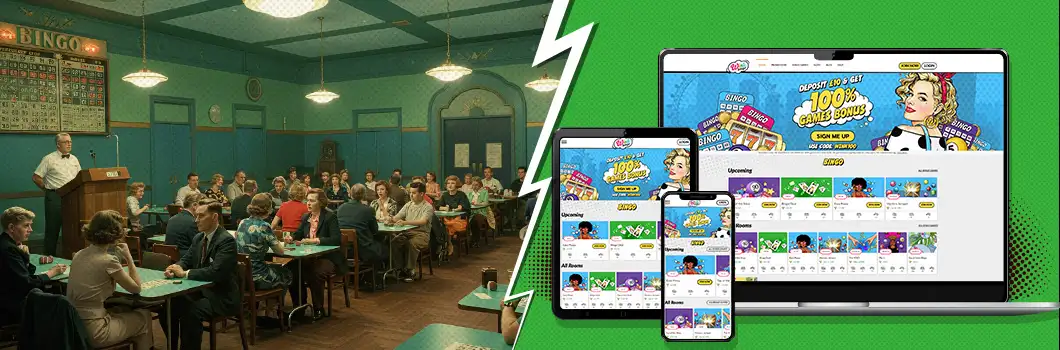
Thanks to online bingo platforms, the game has now been brought to a global audience. The game, despite being digitally recreated, still preserves the community spirit that made it so popular initially, whilst a couple of technological upgrades have made the gameplay experience more seamless.
A collective invention
All in all, bingo has been an invention formed by collectives, being shaped over centuries by cultures, mathematicians and entrepreneurs. It wasn't simply just one person who invented bingo in a day, but it has stood the test of time as a game that can both entertain and foster a social experience simultaneously.
FAQs
Was bingo invented by one person?
No, bingo was not invented by a single person. Its origins can be traced back to a 16th-century Italian lottery game, and it evolved over centuries with contributions from various cultures and key individuals like Edwin S. Lowe and Carl Leffler, who were instrumental in its modern form and popularity.
Where did bingo originate?
The earliest known version of bingo, called "Lo Gioco del Lotto d'Italia," originated in Italy in 1530. It later spread to France as "Le Lotto" and was used for educational purposes in Germany before reaching North America.
Who was Edwin S. Lowe, and what was his role in bingo's history?
Edwin S. Lowe was a New York toy salesman who discovered a carnival game called "Beano" in 1929. He commercialised it, inadvertently renamed it "Bingo" after a player's slip of the tongue, and was crucial in popularising the game across the United States.
Why was a mathematician involved in bingo's development?
Early commercial versions of "Beano" had a limited number of unique cards, leading to frequent ties and multiple winners in larger games. Edwin S. Lowe hired Columbia University mathematics professor Carl Leffler to create thousands of mathematically unique bingo cards, which were vital for the game's expansion.
Has bingo always been called "Bingo"?
No, the game was initially known as "Lo Gioco del Lotto d'Italia" in Italy and "Le Lotto" in France. When Edwin S. Lowe encountered it in the US, it was called "Beano." The name "Bingo" supposedly came from a player accidentally shouting it out, which Lowe then adopted for his commercially produced game.